

BREATHE DEEP | BREATHE EASY
Not more oxygen.
Better
oxygen.
Light-activated oxygen — for everyday rooms.
Inside the device, light meets a photocatalyst. It hands that energy on to the oxygen already in the room — photosynthesis as the model, on a tabletop, with nothing added.
Designed for
- HomeFor daily use
- TravelFor life on the move
- PracticeFor wellness practitioners
In everyday rooms
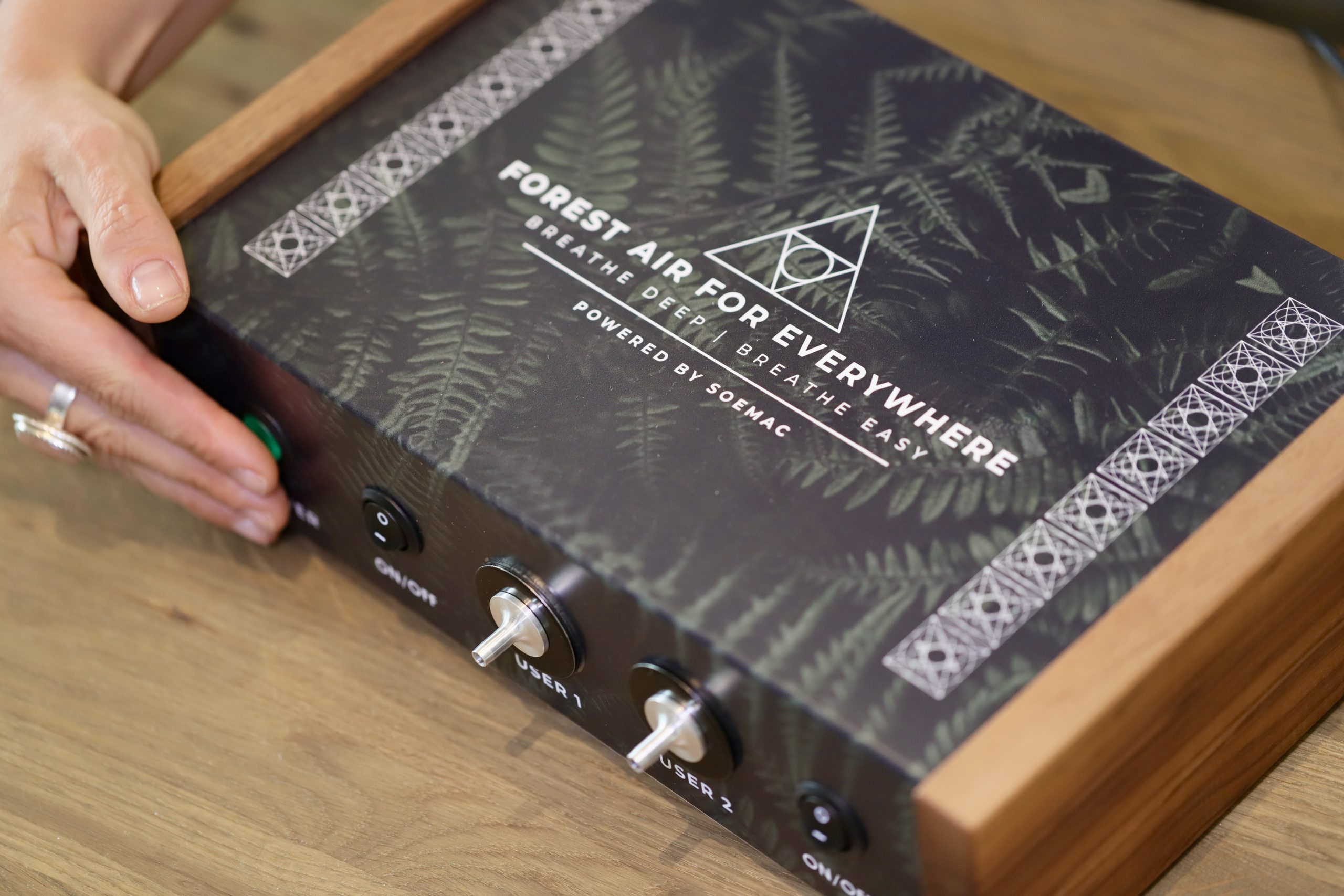
01At the panel 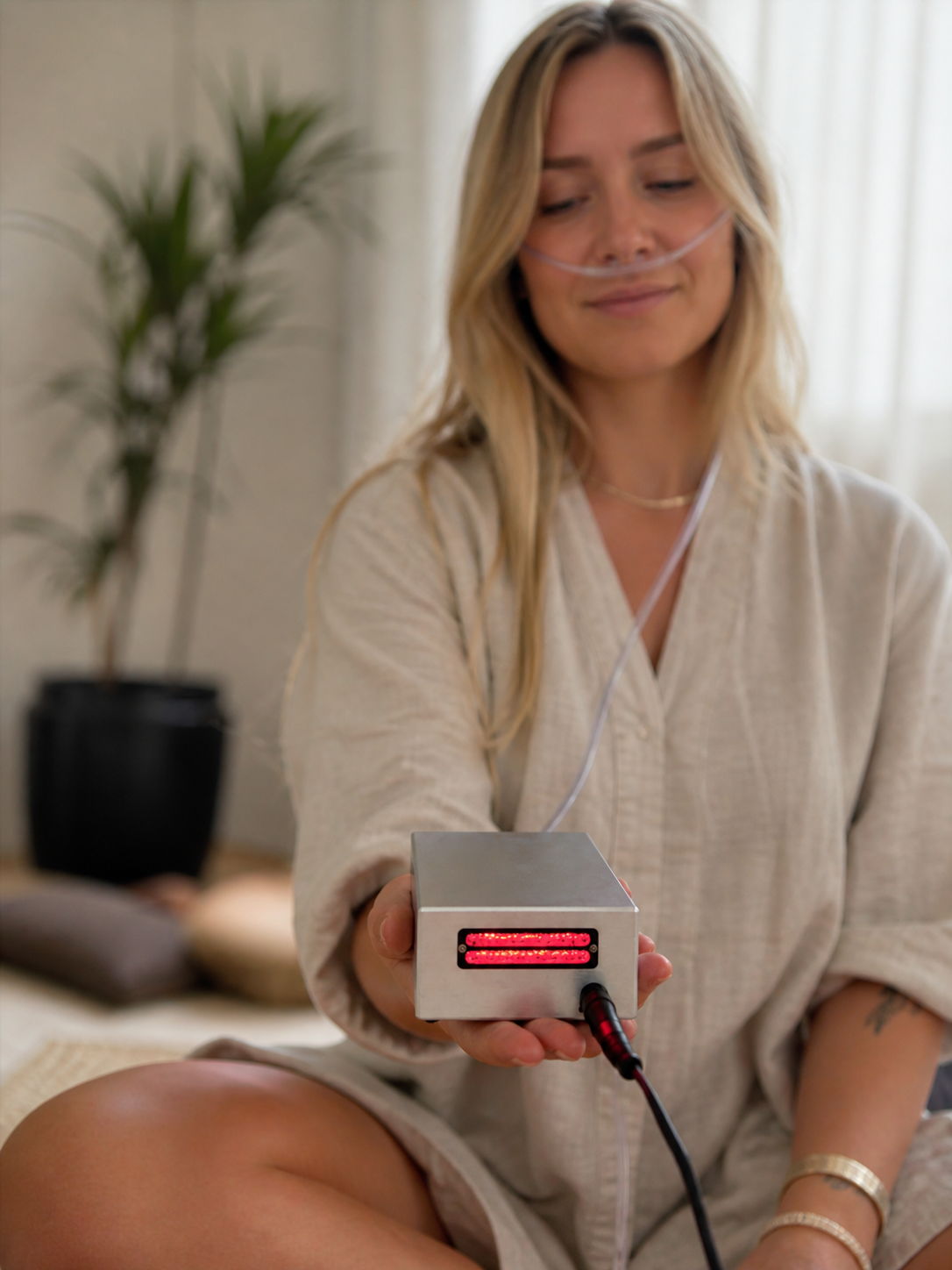
02A quiet quarter of an hour 
03Together 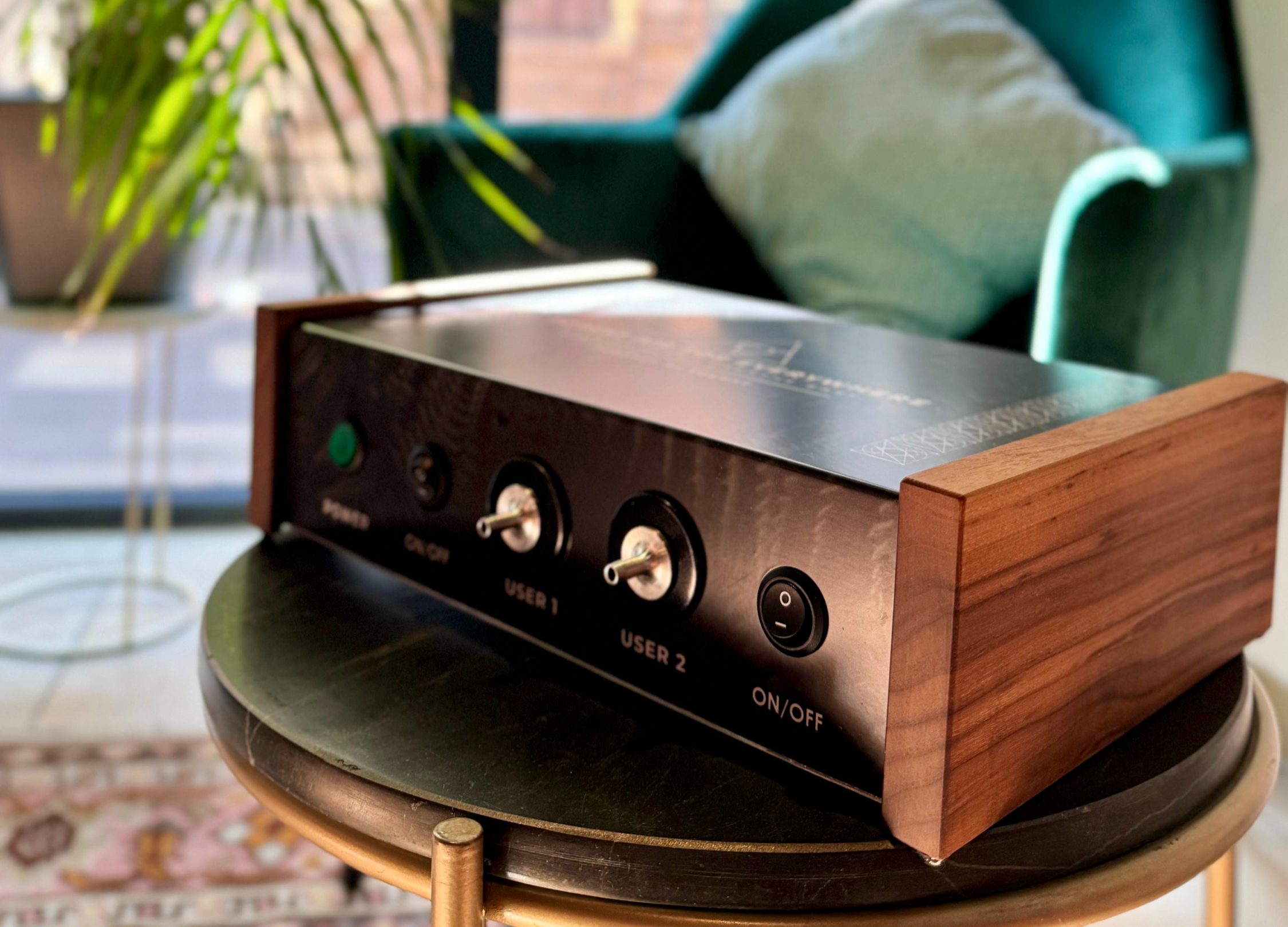
04In the living room 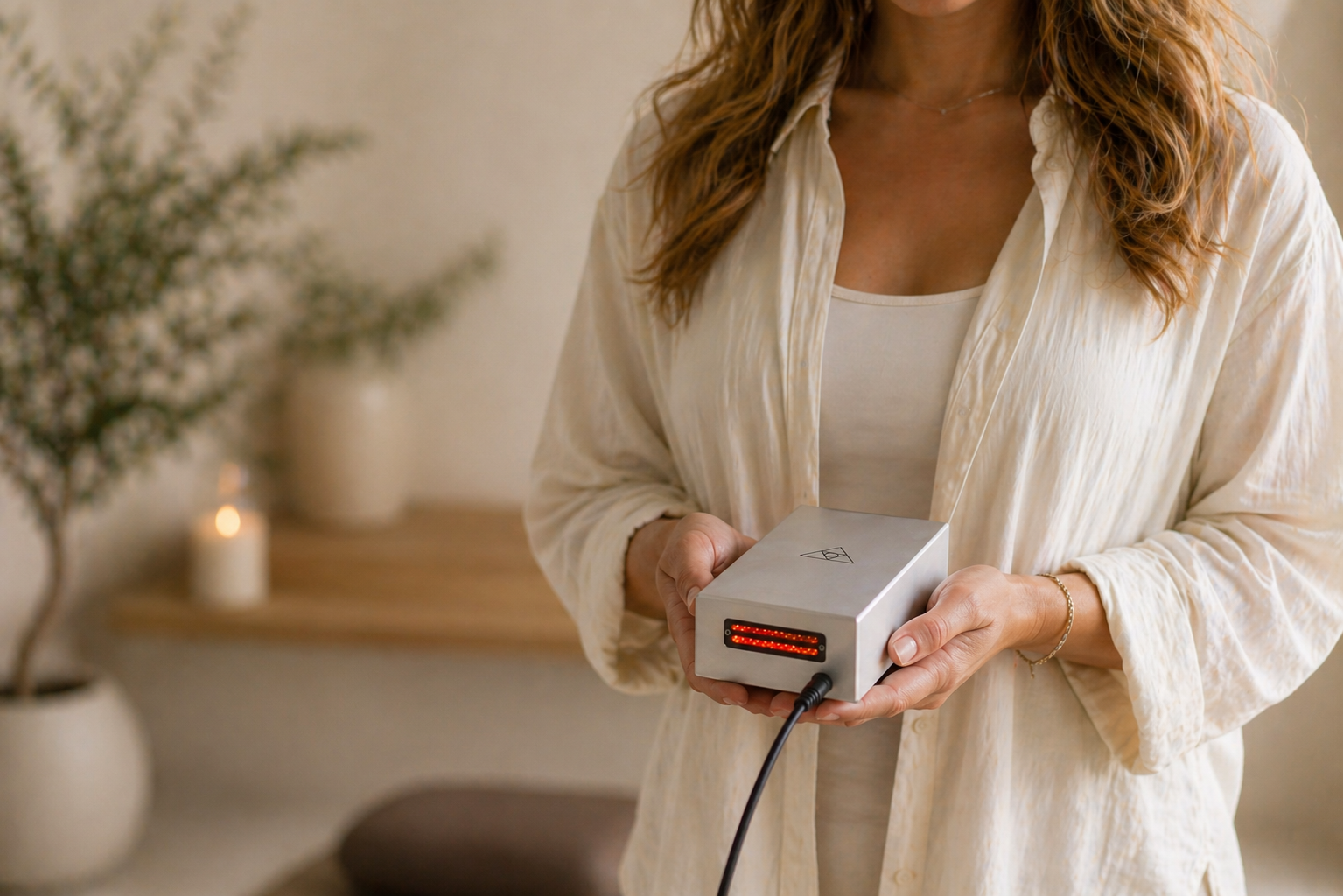
05In both hands 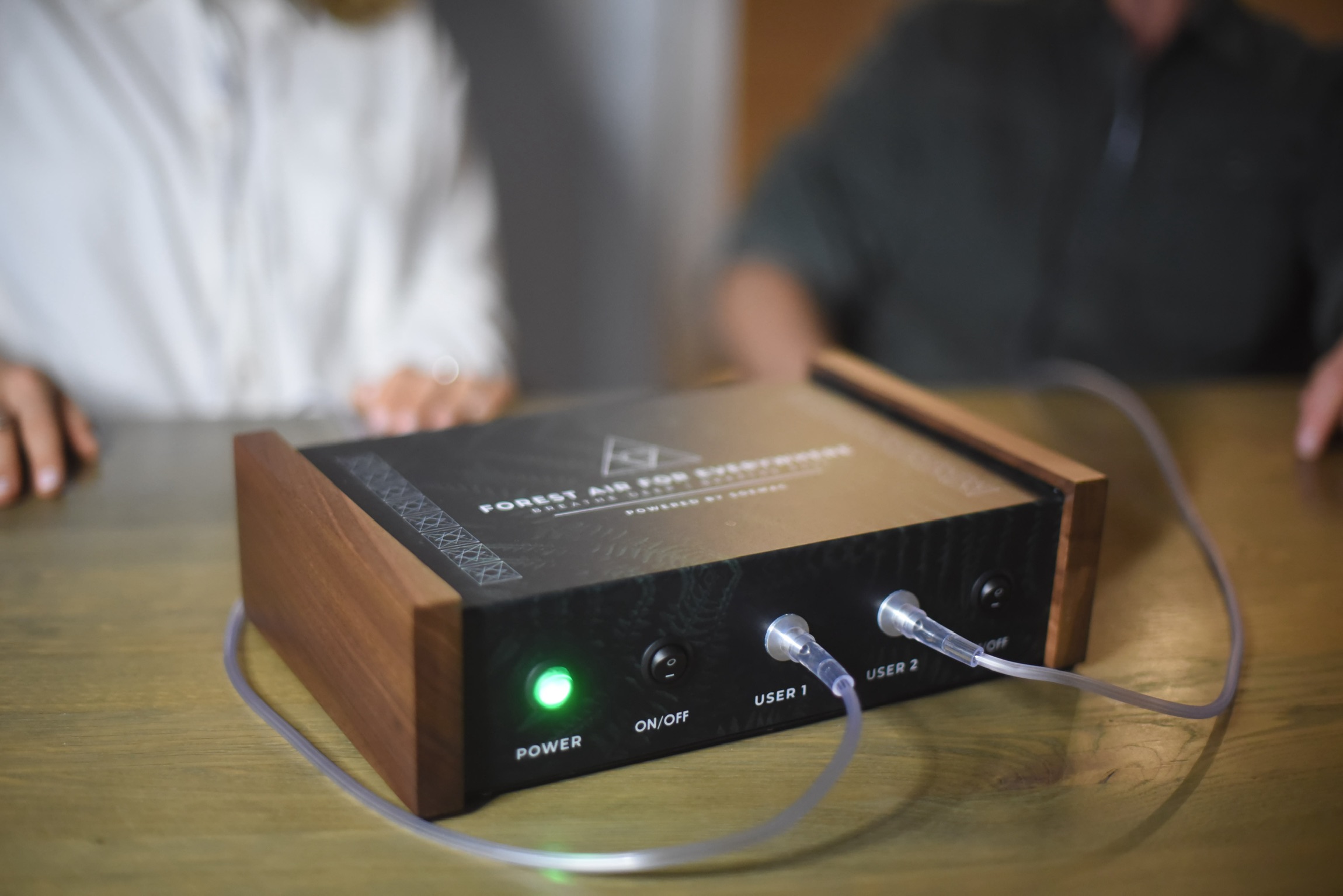
06Wood and metal 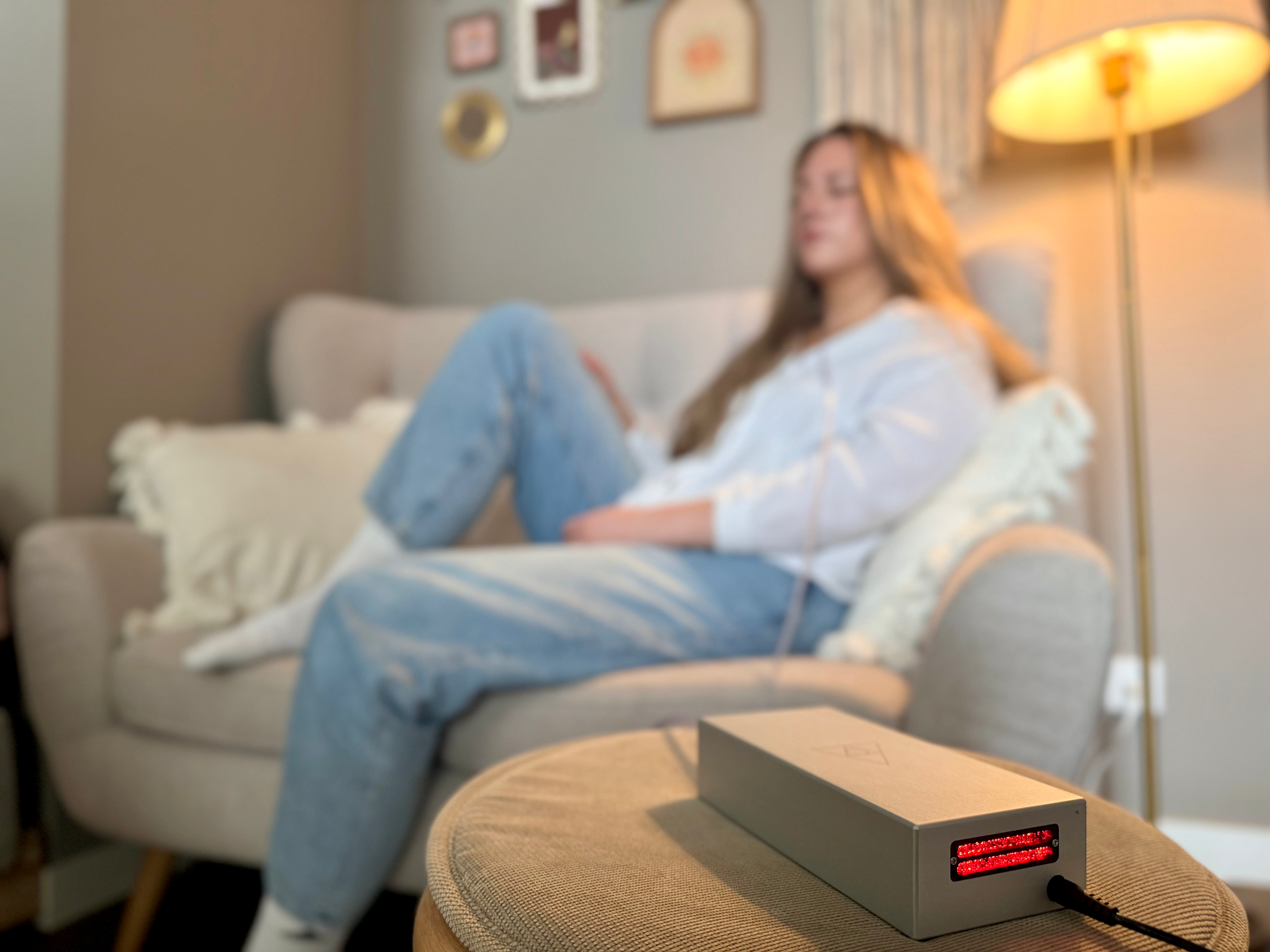
07In the evening 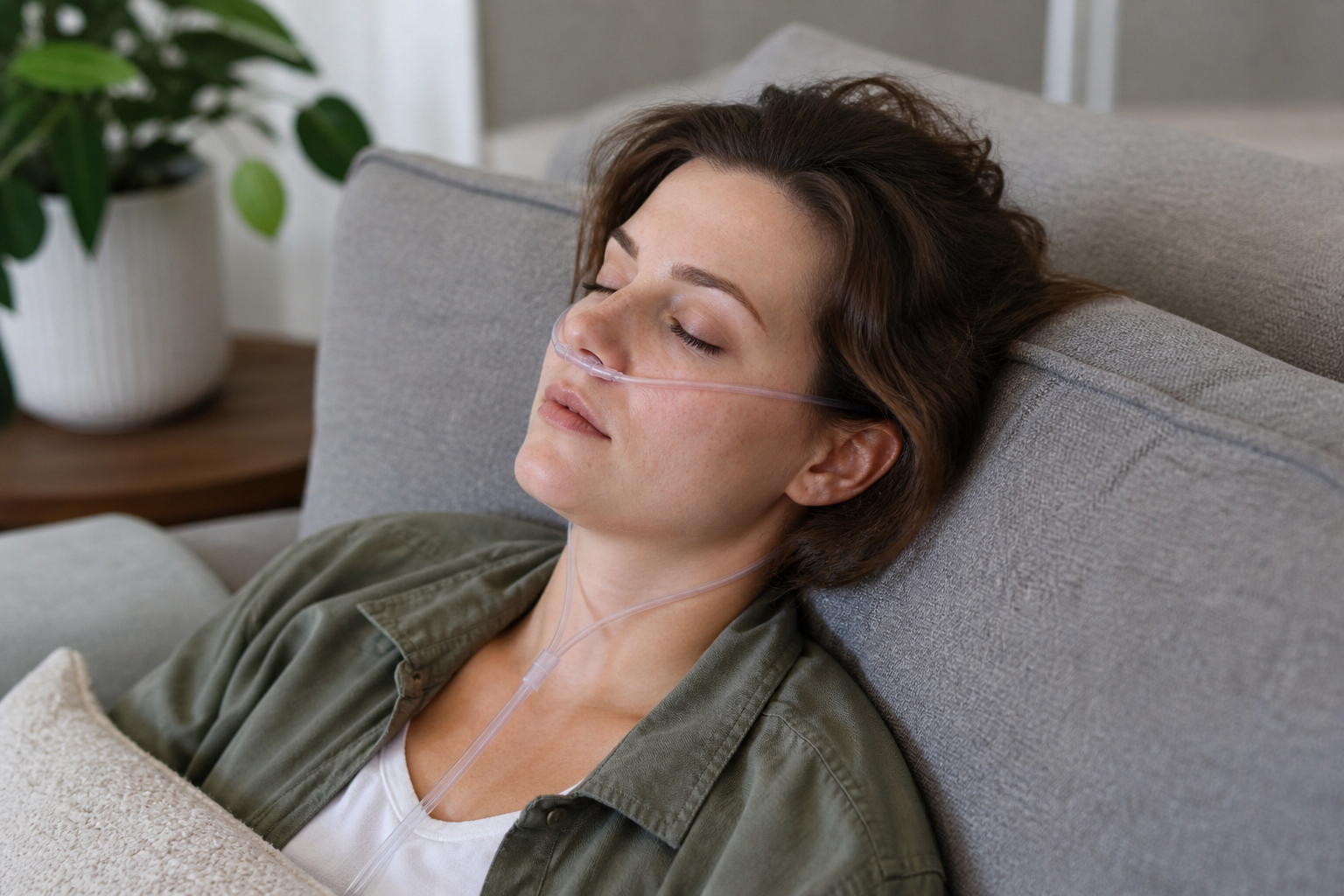
08On the sofa 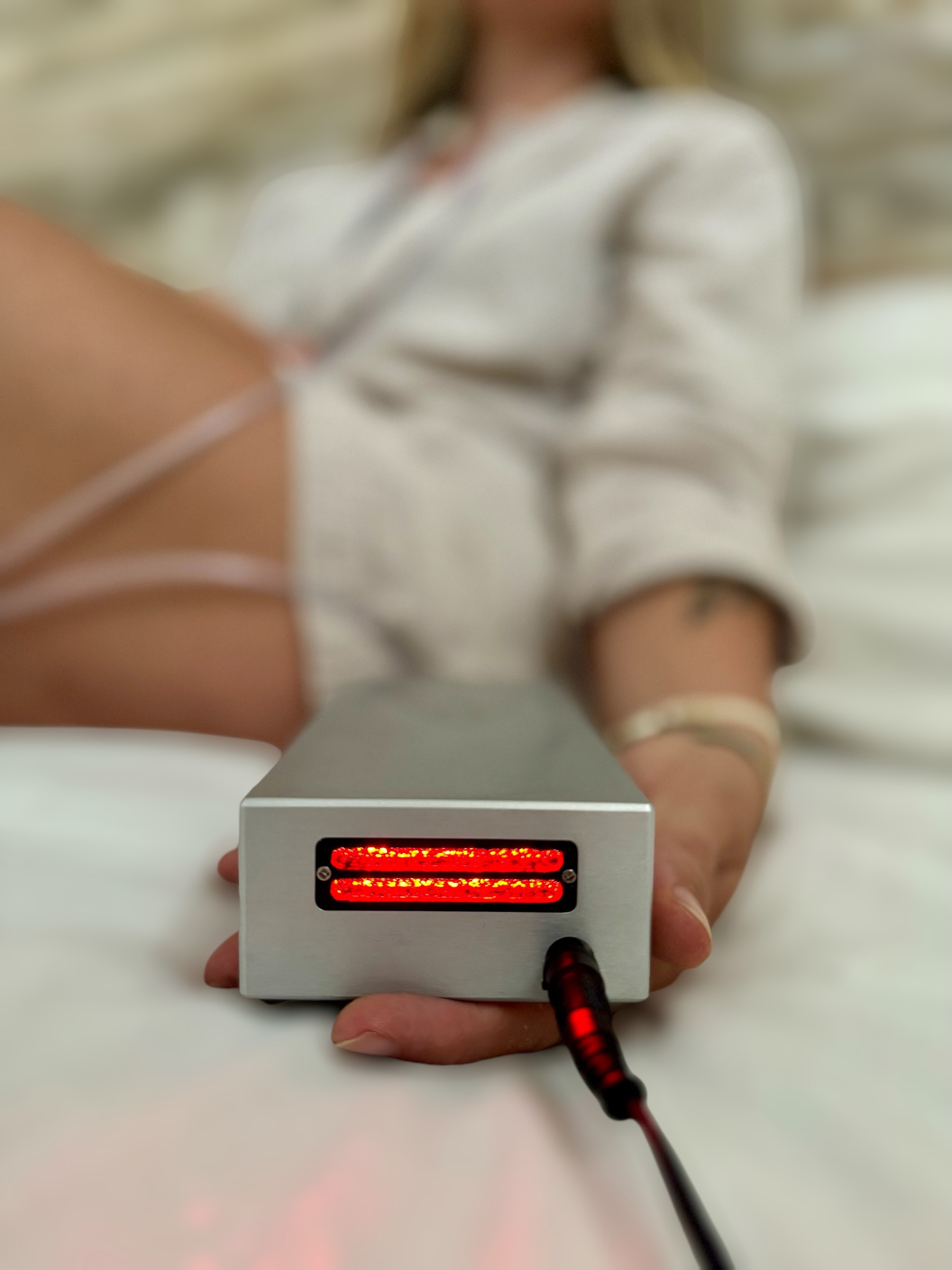
09In the bedroom
Swipe or scroll the strip sideways.
Quality over quantity
“It’s not just how much oxygen we breathe. It’s how well we use it.”
Dr. Otto Warburg · Nobel Prize in Physiology or Medicine, 1931
Not how much oxygen the cell receives — but whether it can use it.
Dr. Otto Heinrich Warburg received the 1931 Nobel Prize in Physiology or Medicine “for his discovery of the nature and mode of action of the respiratory enzyme” — foundational research into how living cells take up and use oxygen (cellular respiration).
Researched with Nottingham Trent University, the University of Derby, the University of Leicester and Roeckpore Medical.
For using Forest Air
Light-charged air.
Through a soft nasal cannula, you breathe air that carries light energy. Inside the device, light has excited the oxygen in it — for nanoseconds, and as it falls back it gives that energy off again as light.
No added oxygen, no ionisation, no ozone. Only light, a catalyst and the oxygen already in the room. The process is researched together with universities in the United Kingdom.
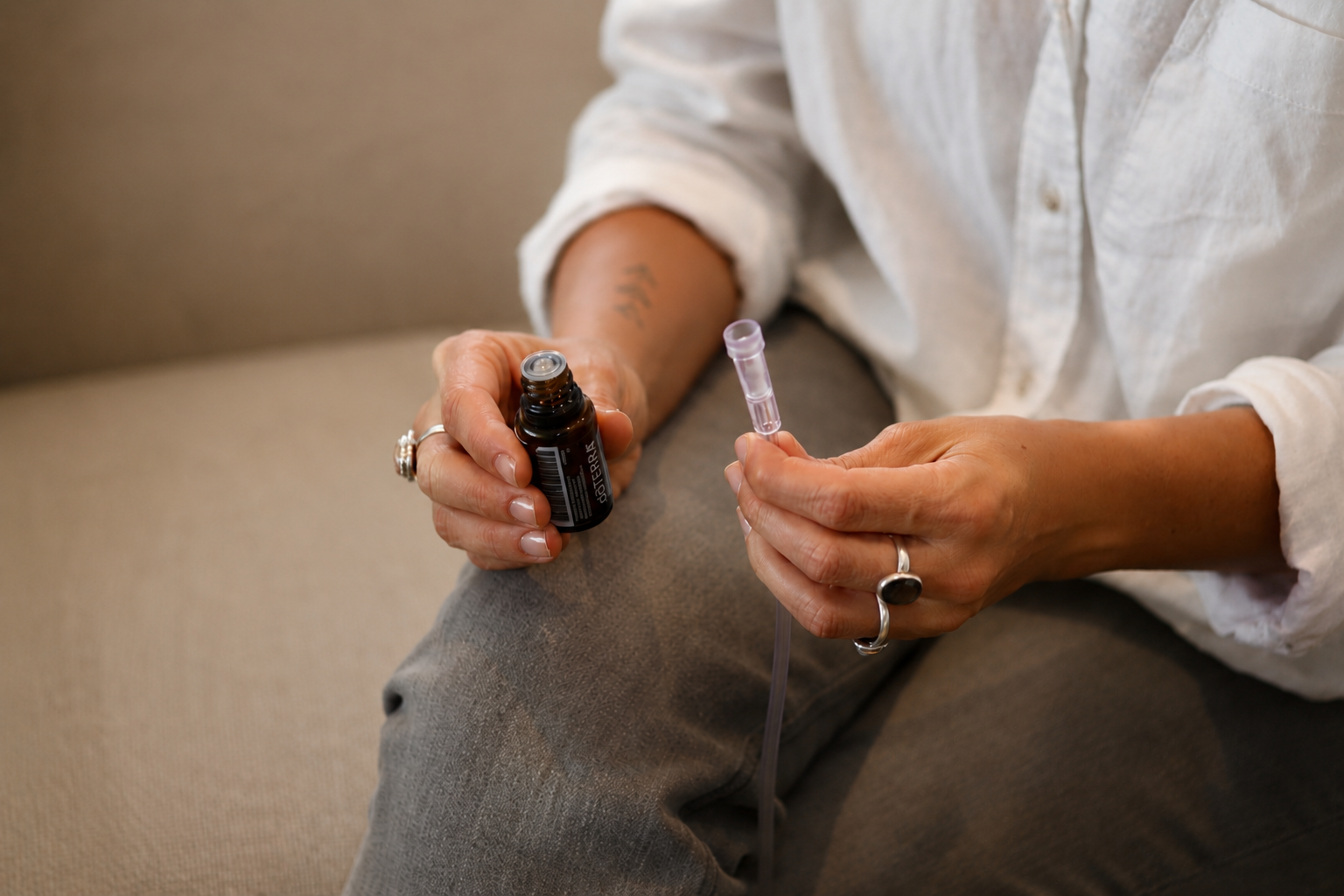
Optionally, a few drops of oil at the end of the cannula — never inside the device. Purely an addition for the senses.
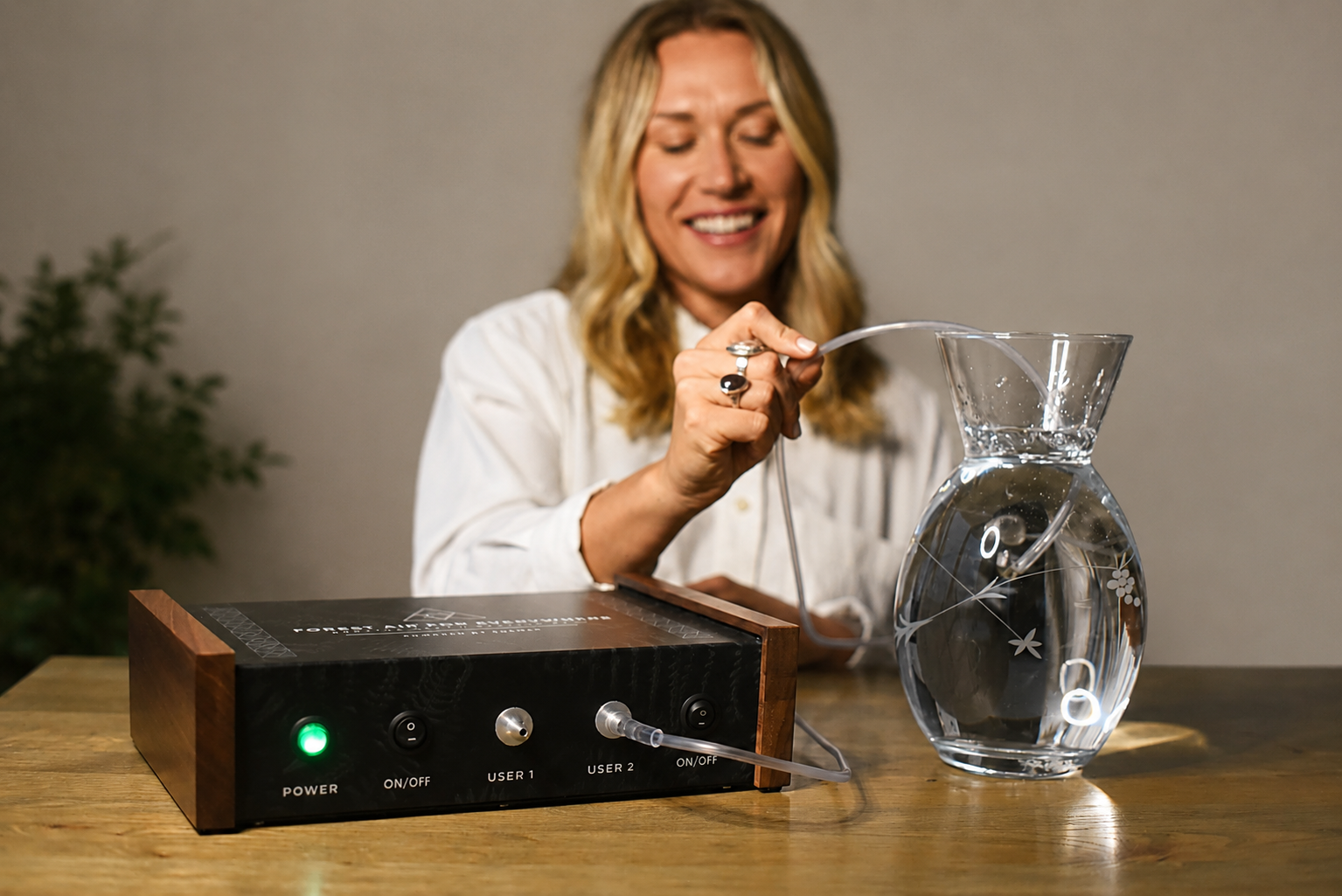
Place the end of your cannula into a glass of water and let the device run for 10 minutes. Drink and enjoy.
Light-charged water.
Certain wavelengths of light order ordinary water into structured water — a fourth phase alongside solid, liquid and gas.
Ordinary drinking water — run through cities and pipes — loses its natural energy. Water in nature is structured by sunlight and movement.
Building on the research of Dr. Gerald Pollack: near surfaces and under certain light frequencies, water molecules arrange into charged, hexagonal layers that store energy and give it back.
The Forest Air collection
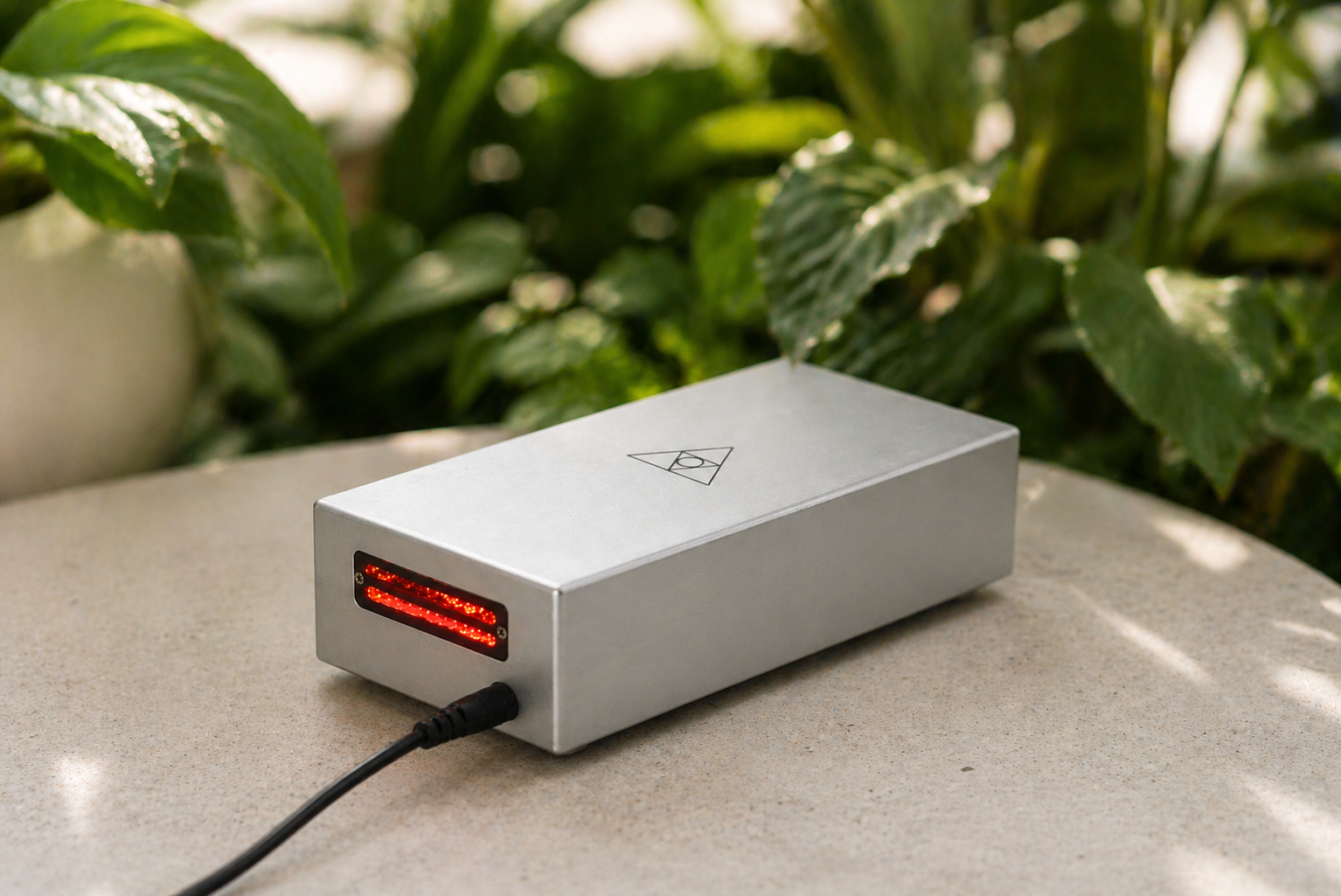
Forest Air Home
For home and travel. One user at a time. Also available for client rentals.
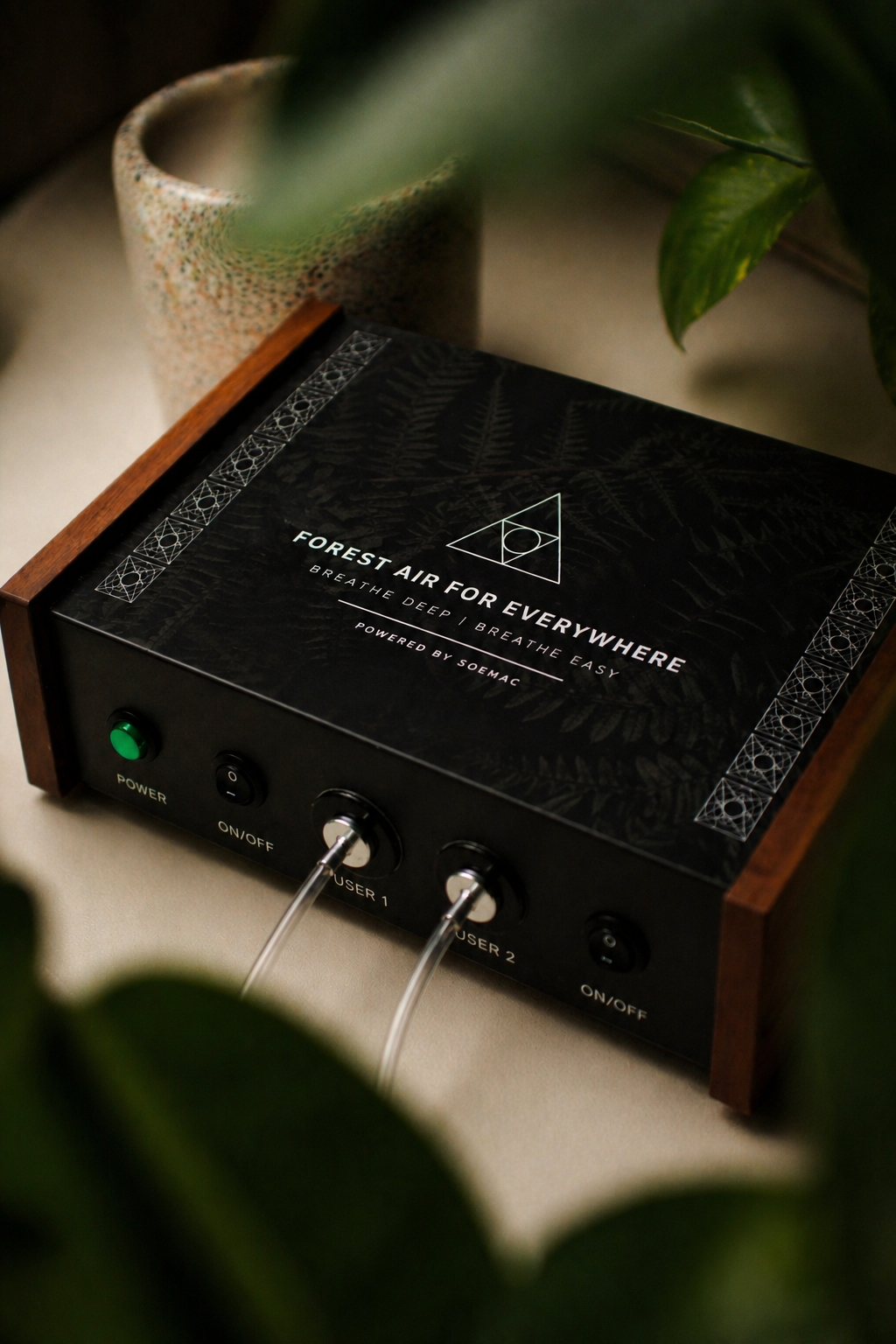
Forest Air Pro
For the practitioner's table. Two users at a time. At home in clinics, studios, and retreats.
What users report.
Breathing
After about three weeks of using the device twice daily, I noticed I could take deeper breaths without that familiar restriction. Walking uphill or climbing stairs felt easier.
Read the full account Less
I've had ongoing breathing concerns for several years, especially during physical activity. After about three weeks of using the device twice daily, I noticed I could take deeper breaths without that familiar restriction. Walking uphill or climbing stairs felt easier. It's been a steady improvement, which I appreciate.
Sleep
I started using this in the evenings, usually about 30 minutes before bed. Over the following days, I began falling asleep more easily and staying asleep through the night.
Read the full account Less
For years, I struggled with falling asleep. My mind would stay active even when my body was tired. I started using this in the evenings, usually about 30 minutes before bed with my magnesium. Over the following days, I began falling asleep more easily and staying asleep through the night. It feels like my system is finally able to switch off properly.
Everyday
After about 15 minutes, my head feels more clear and not as groggy. For me, I notice that after about two weeks.
Read the full account Less
After breathing Forest Air, I always feel a bit uplifted and ready for the day. It's hard to describe — after about 15 minutes, my head feels more clear and not as groggy. I feel more awake. For me, I notice these effects after about two weeks. I will keep using it!
Three of 54 accounts, quoted verbatim. These are individual experiences — not a promise that yours will be the same. Forest Air is a wellness device, not a medical device.
Take 90 seconds to review Forest Air
Before we talk about a device
Why light, of all things?
Because at one single place in your body, respiration and light meet — inside the same molecule. Three cards: the place, the model from nature, and the state the device produces.
Where the question comes from
If light and oxygen meet inside the same molecule, then the interesting question is not how much oxygen is in a room. It is what state it arrives in.
-
Why light matters
IV
Complex IV of the respiratory chain
At the end of that chain sits a molecule that responds to light
The final enzyme is called cytochrome c oxidase. It consumes the oxygen — and is regarded in the research as the main acceptor of red and near-infrared light. This is the point where respiration and light meet not as an image but inside the same molecule. What exactly follows from it is still being studied; that the place exists is not in dispute.
-
How it reaches the device
0.1 mm
The Leaf · thickness of a leaf
Photosynthesis as the model.
Plants turn sunlight into chemical energy. When a leaf takes in more light than it needs, it passes the surplus to the oxygen beside it — which is not produced there, but excited.
-
How it reaches the device
nanoseconds
The Short State · how long the excited state lasts
Singlet oxygen.
In its ground state, two of the oxygen molecule's electrons spin in parallel. Light flips one of them and lifts it an orbital higher — for nanoseconds. Falling back, it gives the energy off again as light. That window is what the device produces.
Drag · arrow keys · dots below
The figures on this page describe cell biology and physics. They are not a statement about what a device does for a person.
Inside The Forest Air Device
Where Light Meets The Catalyst
Inside the device, specific wavelengths of light transfer energy to the oxygen by way of a catalyst.
- Ground state O₂(³Σg⁻) — triplet
- Photon beams from the two light sources
- Excited oxygen O₂(¹Δg) — catalyst to nozzle
- Photon on falling back — O₂(³Σg⁻) + hν
The beams, the gold and the terracotta are a way of making this visible, not a picture of nature — no singlet oxygen is released as a gas.
Drag or use the arrow keys to turn the chamber
Studied at universities.
In research collaboration with institutions across the United Kingdom.
Research into activated oxygen has been ongoing since the 1990s. The following institutions represent our most recent academic partnerships.
VogueFrance
On the red carpet's prep list.
Vogue France featured Forest Air Home in its Cannes guide to red-carpet-ready skin — among the tools today's top experts reach for before the big moment.
Nichola Joss is one of the world's most in-demand facialists — the hands behind that famous lit-from-within, red-carpet skin and a go-to name for beauty editors and Vogue alike. Forest Air is part of her own ritual and the treatments she gives — and she's a true fan.
Seen and studied
- Vogue France
- University of Derby
- University of Leicester
- Nottingham Trent University
- Roeckpore Medical
Trusted by practitioners worldwide.
Not sure which device fits you?
Whether you practise or want Forest Air at home for yourself — good air does everyone good. Which of the two devices is right for that comes down to a few questions, and those take five minutes.